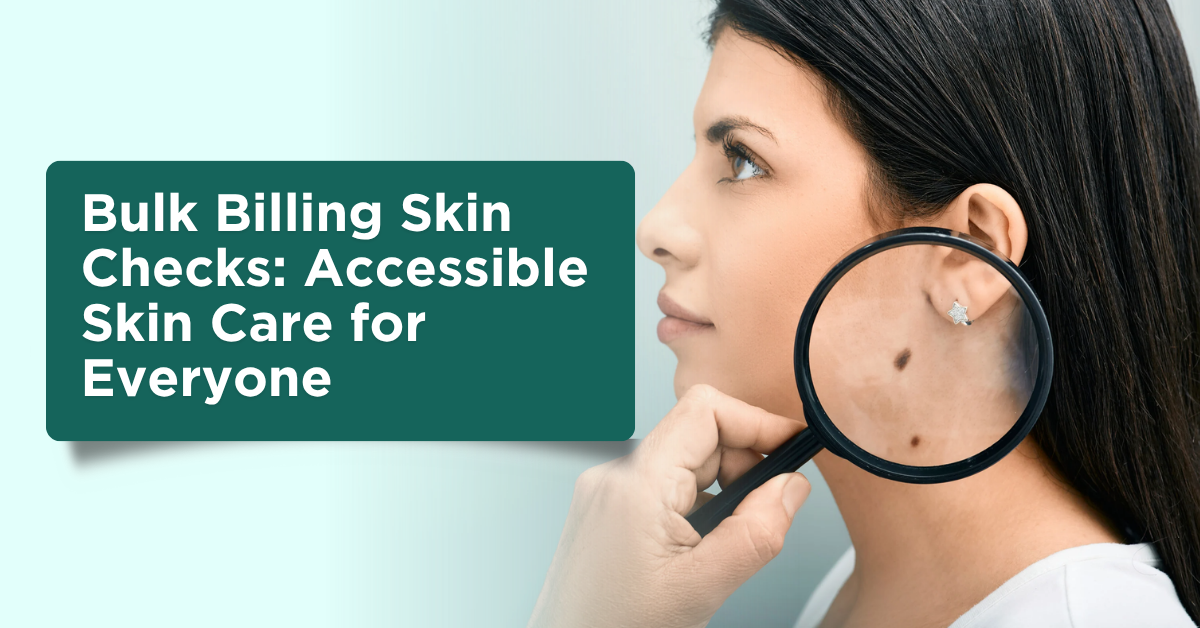
Australia has one of the highest rates of skin cancer in the world, making regular skin checks and timely assessment of suspicious spots especially important. For many patients, however, concerns about cost can make them hesitant to book a skin check.
A bulk billing skin check may be available in some circumstances, depending on the clinic’s billing policy, the type of consultation, Medicare eligibility and whether any procedures are required. Even when a consultation is not fully bulk billed, a Medicare rebate may help reduce the out-of-pocket cost.
Most importantly, uncertainty about fees should not delay the assessment of a new or changing spot. A GP can assess your skin, determine whether further investigation is needed and explain any likely costs before additional procedures are performed. If you are considering a bulk billing skin check, asking about the applicable fees when booking can help you understand what to expect.
What Is a Skin Check?
A skin check is a clinical examination performed by a GP or another appropriately trained healthcare professional to assess moles, lesions and other changes to the skin.
A GP skin check may include examining:
- New spots or growths
- Moles that have changed in size, shape or colour
- Areas that bleed, crust or do not heal
- Unusual or changing pigmentation
- Areas of sun-damaged skin
- Lesions that look different from other spots on your skin
Your GP may use a dermatoscope, a handheld device that provides a closer view of the structures within a skin lesion.
A skin check may focus on a specific area or concern, or, where appropriate, involve a more comprehensive examination of the skin. If you are looking for a bulk billing skin check, it is important to confirm the clinic’s current billing arrangements when booking.
Why Skin Cancer Checks Matter
Skin cancers can sometimes develop without pain or other obvious symptoms, which is why it is important to pay attention to changes in your skin.
A skin cancer check can help identify suspicious changes early, when treatment may be simpler and more effective.
You should arrange an assessment if you notice:
- A new mole or spot
- A mole that changes in size, shape or colour
- A lesion that repeatedly bleeds or crusts
- A sore that does not heal
- A spot that becomes itchy, tender or crusted
- A lesion that looks noticeably different from your other spots
Having a suspicious-looking lesion assessed does not mean that it is cancerous. Many unusual or suspicious-looking spots are benign. However, a clinical assessment can help determine whether further investigation or treatment is needed.
What Does “Bulk Billing” Mean?
Bulk billing means that a healthcare provider accepts the Medicare benefit as full payment for an eligible Medicare-covered service.
When a consultation is bulk billed, the patient generally does not have to pay a gap fee for that specific service.
However, not every part of a skin check is automatically bulk billed. Additional fees may apply for services such as:
- Longer or more complex consultations
- Biopsies
- Minor procedures
- Lesion removal
- Pathology
- Specialist referrals
As billing arrangements can vary between medical practices and depending on the services required, it is a good idea to ask the clinic about any potential costs when booking your appointment. If you are interested in a bulk billing skin check, you can ask about the billing arrangements before your appointment.
Are Skin Checks Covered by Medicare?
A medically necessary GP consultation may be eligible for a Medicare rebate. However, whether your skin check is fully bulk billed, attracts a Medicare rebate or is privately billed depends on several factors, including:
- The clinic’s billing policy
- Your Medicare eligibility
- The type and length of the consultation
- Whether a procedure is performed
- Whether pathology is required
There is no universal rule that all routine skin checks are free. Billing arrangements can vary between medical practices and depending on the services required.
If you are considering a skin check, ask the practice whether the consultation is bulk billed and whether any additional fees may apply if a biopsy, lesion removal or other procedure is required. If you are specifically considering a bulk billing skin check, confirming the billing arrangements beforehand can help you understand any potential out-of-pocket costs.
Who Should Consider a Skin Check?
You may benefit from a skin check if you have risk factors such as:
- Fair skin
- A history of frequent sunburn
- Many moles
- A personal history of skin cancer
- A family history of melanoma
- Significant lifetime sun exposure
- Regular outdoor work
- A weakened immune system
However, you do not need to have obvious risk factors to have a skin lesion assessed. Any new or changing spot, mole or lesion should be checked by a GP, particularly if you notice changes in its size, shape, colour or appearance.
What Happens During a GP Skin Check?
Your GP will usually begin by asking about:
- Your personal history of skin cancer
- Your family history
- Your sun exposure
- Previous sunburn
- Any spots or changes you have noticed
- How long the changes have been present
Your GP will then examine the areas of concern. Depending on your individual circumstances and the type of skin check, they may examine multiple areas of the body, including areas that receive less obvious sun exposure.
If your GP identifies a lesion that requires further assessment, they may recommend:
- Monitoring the lesion
- Clinical photography
- A follow-up review
- A biopsy
- Removal of the lesion
- Referral to a dermatologist
For patients considering a bulk billing skin check, it can be helpful to discuss the consultation and any potential additional costs with the clinic when making an appointment.
Does a Suspicious Spot Always Need to Be Removed?
No. Not every unusual skin lesion requires immediate removal.
Your GP may determine that a lesion appears benign and recommend monitoring it. In other cases, a biopsy may be recommended to help confirm the diagnosis.
A biopsy involves removing a small sample of skin so that a pathologist can examine it under a microscope. Your GP should explain why a biopsy is being recommended and whether any additional fees may apply.
How Often Should You Have a Skin Check?
There is no single interval that is suitable for everyone. How often you need a professional skin check depends on your individual risk factors.
People at higher risk may require more regular skin examinations, while lower-risk patients may be advised to monitor their skin and arrange an appointment if they notice a new or changing spot.
Your GP can help determine an appropriate schedule based on factors such as:
- Skin type
- Number of moles
- Family history
- Previous skin cancer
- Sun exposure
- Medical history
Can You Check Your Skin at Home?
Yes. Regularly checking your skin can help you become familiar with its normal appearance and recognise changes that may need medical assessment.
When checking your skin, remember to look at areas such as:
- Face
- Scalp
- Back
- Arms
- Legs
- Soles of the feet
- Between the toes
- Behind the ears
Using a mirror or asking a partner or family member for help can make it easier to check areas that are difficult to see.
Regular skin checks at home are useful, but they do not replace professional assessment. If you notice a new, changing or concerning spot, make an appointment with your GP.
What About the ABCDE Rule?
The ABCDE guide can help you recognise skin changes that may need medical attention:
- A – Asymmetry: One half of the spot looks different from the other half.
- B – Border: The edges are irregular, uneven or poorly defined.
- C – Colour: The spot has multiple colours or its colour is changing.
- D – Diameter: The spot is increasing in size.
- E – Evolving: The spot is changing in appearance or developing new symptoms.
The ABCDE guide is a useful tool for recognising changes, but not every skin cancer follows this pattern.
If a spot looks unusual or different from your other spots, arrange an appointment with your GP rather than waiting for it to meet every ABCDE criterion.
What If Cost Is Stopping You From Booking?
Uncertainty about fees should not delay the assessment of a concerning skin lesion.
When booking your appointment, consider asking the clinic:
- Is the GP consultation bulk billed?
- Is there a gap fee?
- Is a Medicare rebate available?
- Are biopsies or lesion removals charged separately?
- Are there additional pathology fees?
Understanding the likely costs before your appointment can help you make an informed decision and avoid unexpected expenses. If you are looking for a bulk billing skin check, asking about the applicable fees before booking can help you understand what to expect.
Skin Checks at Cranbourne West Medical Centre
At Cranbourne West Medical Centre, our GPs can assess new, changing or concerning spots and help determine whether further investigation is required. During your appointment, your GP can discuss your concerns, examine the affected area and advise you on the most appropriate next steps.
If you are concerned about a mole, skin lesion or other change to your skin, it is important not to delay seeking medical advice. When booking your appointment, our reception team can also provide information about the consultation and applicable fees, including any questions you may have about bulk billing and Medicare rebates. If you are looking for a bulk billing skin check, you can ask our reception team about the current billing arrangements when booking your appointment.
If you have noticed a new or changing skin lesion, contact Cranbourne West Medical Centre to arrange an appointment with a GP.
FAQs
Can I get a bulk billing skin check?
A bulk billed skin check may be available depending on the clinic’s billing policy, your Medicare eligibility and the type of consultation required. It is best to ask the clinic about fees when booking your appointment.
Is a GP skin check covered by Medicare?
A medically necessary GP consultation may be eligible for a Medicare rebate. Whether the consultation is fully bulk billed or privately billed depends on the practice’s billing arrangements and the services provided.
Do I need to have a suspicious mole to book a skin check?
No. You can speak with your GP about a skin check if you have concerns about your skin, particularly if you have noticed a new or changing spot or have risk factors for skin cancer.
What happens if my GP finds a suspicious spot?
Your GP may recommend monitoring the lesion, taking clinical photographs, arranging a follow-up appointment, performing a biopsy or removing the lesion. In some cases, a referral to a dermatologist may be recommended.
Does a skin check include a biopsy?
Not necessarily. A biopsy is only recommended when your GP considers it appropriate to help assess a particular lesion. Additional fees may apply for biopsies, lesion removal or pathology.
How often should I have a skin check?
There is no single schedule that is suitable for everyone. The recommended frequency depends on factors such as your skin type, number of moles, family history, previous skin cancer, sun exposure and medical history. Your GP can advise you on an appropriate schedule.
Can I check my skin at home?
Yes. Regularly checking your skin can help you recognise new or changing spots. However, home skin checks do not replace professional assessment. If you notice a concerning change, arrange an appointment with your GP.