
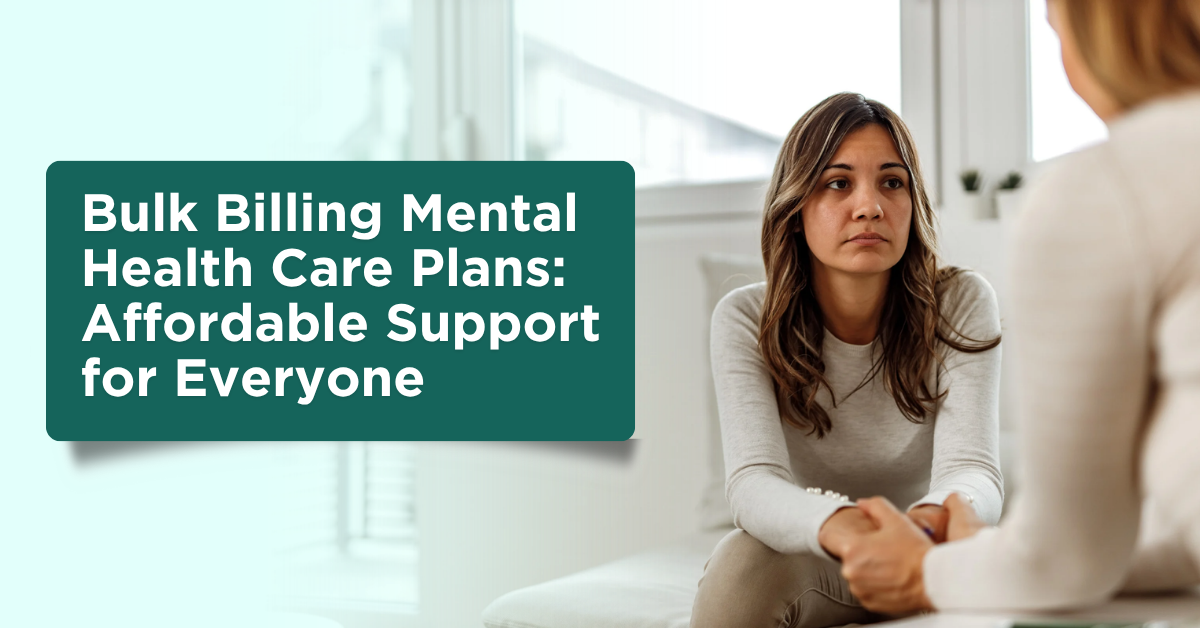
Cost can be one of the reasons people delay seeking mental health support. If you are experiencing anxiety and depression, ongoing stress, grief or another mental health concern, Medicare may help reduce the cost of accessing eligible mental health professionals through a GP Mental Health Treatment Plan.
Under Australia’s Better Access initiative, eligible patients can currently claim Medicare benefits for up to 10 individual and 10 group mental health treatment services per calendar year. These services may be provided by eligible psychologists and certain other mental health professionals.
However, an important distinction often gets lost when people search for a bulk billed psychologist: a Mental Health Treatment Plan provides access to Medicare-subsidised care, but it does not automatically mean every psychology appointment will be completely free.
Understanding how the system works can help you know what to expect before making an appointment.
What Is a GP Mental Health Treatment Plan?
A GP Mental Health Treatment Plan is a structured plan developed with your GP when you have an eligible diagnosed mental health condition and require an appropriate level of support.
Your GP will talk with you about what you have been experiencing, how your symptoms are affecting everyday life and what type of support may be appropriate.
Depending on your circumstances, this could include concerns such as:
- Anxiety
- Depression
- Significant or persistent stress
- Trauma-related mental health concerns
- Eating disorders
- Substance use disorders
- Other eligible mental health conditions
A Mental Health Treatment Plan is not simply a referral form. It provides a framework for managing your mental health and accessing appropriate treatment through the Better Access initiative when you meet the eligibility requirements. For a more detailed explanation, see our guide to how a Medicare Mental Health Care Plan actually works.
How Many Medicare Psychology Sessions Can You Receive?
Eligible patients can currently receive Medicare benefits for up to:
- 10 individual mental health treatment services per calendar year, and
- 10 group mental health treatment services per calendar year.
The individual sessions may include psychological therapy provided by eligible clinical psychologists or focused psychological strategies delivered by eligible registered psychologists and certain other health professionals. If you choose a bulk billed psychologist, the Medicare benefit may cover the full eligible consultation fee, depending on the provider’s billing arrangements.
Your GP does not necessarily refer you for all 10 individual sessions at once.
Under the current Better Access arrangements, an initial course of treatment can include up to six individual services. Your GP can then review your progress and, where clinically appropriate, refer you for further sessions within the annual Medicare limit.
Does a Mental Health Treatment Plan Mean Psychology Is Free?
Not necessarily.
This is particularly important for patients searching online for a bulk billed psychologist.
A Mental Health Treatment Plan allows eligible patients to claim Medicare benefits for approved mental health treatment services. However, psychologists and other providers set their own fees.
If the provider bulk bills, they accept the Medicare benefit as full payment for the eligible service, meaning there is generally no out-of-pocket cost for that service.
If they do not bulk bill, you may need to pay the provider’s fee and receive a Medicare rebate, leaving a gap payment.
Healthdirect specifically notes that mental health professionals decide how much they charge and that Medicare will often cover only part of the cost.
For this reason, it is worth asking about fees when contacting a psychologist rather than assuming your Mental Health Treatment Plan makes every appointment free.
What Is the Medicare Rebate for Psychology Sessions?
The Medicare rebate for psychology sessions varies according to factors such as the type of practitioner and service provided.For patients considering a bulk billed psychologist, understanding how Medicare rebates work can help clarify whether there will be any out-of-pocket costs.
For example, different Medicare item numbers apply to eligible clinical psychologists, registered psychologists and other allied mental health professionals.
As of July 2026, the Medicare Benefits Schedule lists a schedule fee of $175.30 and an 85% benefit of $149.05 for one eligible in-person individual psychological therapy service of at least 50 minutes provided by a clinical psychologist under item 80010. Other psychology services have different Medicare fees and rebates.
Because provider fees can also vary, the amount you personally pay may differ considerably between practices. A bulk billed psychologist may accept the applicable Medicare benefit as full payment for an eligible service, meaning you generally won’t have an out-of-pocket cost for that appointment.
Before booking, consider asking:
- What is the full consultation fee?
- What Medicare rebate applies?
- Is there a gap payment?
- Does the psychologist offer bulk billing?
- Are concession arrangements available?
Knowing these details beforehand can make it easier to plan ongoing care.
Who Can Provide Medicare-Subsidised Mental Health Treatment?
A Mental Health Treatment Plan does not limit care exclusively to clinical psychologists.
Depending on your referral and treatment needs, eligible Better Access services may be provided by:
- Clinical psychologists
- Registered psychologists
- Eligible GPs
- Eligible prescribed medical practitioners
- Eligible social workers
- Eligible occupational therapists
Your GP can discuss the type of practitioner who may be appropriate for your circumstances.
What Happens During a Mental Health Care Plan Appointment?
Your GP will generally need time to understand what you have been experiencing before determining whether a Mental Health Treatment Plan is appropriate. If you are considering a bulk billed psychologist, your GP can also discuss potential referral options and help you understand what to expect from psychology services.
The consultation may include discussion of:
- Your current symptoms
- How long you have been experiencing them
- Sleep and energy levels
- Mood and anxiety
- Work, study or family pressures
- Relationships and social support
- Physical health
- Alcohol or other substance use
- Previous mental health treatment
- Current medications
- Your treatment goals
Your GP may also use questionnaires or other assessment tools where appropriate.
You do not need to know exactly what is “wrong” before making the appointment. If something has changed in how you are thinking, feeling or coping, discussing it with your GP can be a useful starting point. If you are then referred to a bulk billed psychologist, you can ask about the available services, fees and Medicare arrangements before your first session.
When Should You Speak to Your GP About Anxiety and Depression?
Mental health difficulties do not need to reach a crisis point before you seek help.
Consider speaking with your GP if you have noticed persistent changes such as:
- Feeling sad, empty or hopeless
- Excessive worry or anxiety
- Difficulty concentrating
- Changes in sleep
- Loss of interest in activities you previously enjoyed
- Irritability
- Feeling overwhelmed
- Changes in appetite
- Withdrawing from family or friends
- Difficulty functioning at work, school or home
These experiences can have many possible causes and do not automatically mean you have a particular mental health condition.
A GP can assess what you are experiencing and discuss appropriate next steps.
Can Your GP Refer You to a Psychologist?
Yes.
When clinically appropriate and eligibility requirements are met, a GP can prepare a Mental Health Treatment Plan and provide a referral for eligible treatment services. If you’re looking for a bulk billed psychologist, you can discuss available providers and billing options with your GP or chosen mental health professional.
Current Better Access arrangements also contain requirements relating to who can provide the referral. Depending on the circumstances, eligible referrals may come from a patient’s GP or prescribed medical practitioner at the practice where they are enrolled in MyMedicare, or from their usual medical practitioner managing their Mental Health Treatment Plan. Psychiatrists and paediatricians can also provide eligible referrals in specified circumstances.
Your GP can help explain which pathway applies to you.
Do You Have to Use the Psychologist Your GP Recommends?
Not necessarily.
The Australian Government’s Better Access patient information notes that your GP can refer you to a suitable provider, or you may choose your own provider after receiving the appropriate referral, provided that practitioner is eligible to deliver services under the Better Access initiative.
Finding the right therapeutic fit can matter.
You may want to consider a psychologist’s experience with your particular concern, location, appointment availability, telehealth options and fees.
If affordability is a priority, you can also ask whether the provider offers bulk billing, reduced fees or other payment arrangements.
What Happens After Your First Psychology Sessions?
Mental health treatment should be reviewed rather than simply continuing without assessment.
Under current Better Access arrangements, the initial course of treatment can include up to six individual sessions. Following the initial course, your GP can review your progress and determine whether additional treatment is appropriate within the annual Medicare entitlement. If you are seeing a bulk billed psychologist, you can also confirm whether bulk billing continues to apply to any additional eligible sessions.
A review gives you and your GP an opportunity to discuss:
- Whether treatment is helping
- Any changes in symptoms
- Whether your goals have changed
- Whether additional sessions are appropriate
- Whether another form of support should be considered
If you continue working with a bulk billed psychologist, discussing any changes to your treatment needs and billing arrangements can help you plan your ongoing care.
The goal is to make sure your care continues to reflect your individual needs.
Does a Mental Health Treatment Plan Expire?
According to Healthdirect, a Mental Health Treatment Plan itself does not expire, and you can begin using it when you are ready. However, Medicare-funded treatment sessions remain subject to the applicable annual limits and referral requirements.If you plan to see a bulk billed psychologist, it is also worth confirming that the provider currently offers bulk billing for eligible services.
If you have an older plan or referral and are unsure whether it can still be used, check with your GP and mental health provider before making an appointment.
Is Mental Health Support Only for Severe Conditions?
No.
Seeking support earlier can provide an opportunity to address difficulties before they have a greater effect on work, relationships and everyday life. If you’re considering a bulk billed psychologist, speaking with your GP can help you understand whether you may be eligible for Medicare-subsidised mental health services.
At the same time, Medicare eligibility under Better Access has specific clinical requirements. Current Australian Government guidance states that referrals for Better Access treatment services should be used for patients who require at least a moderate level of support.
Your GP can assess your circumstances and explain whether a Mental Health Treatment Plan is appropriate or whether another support pathway may better suit your needs.
FAQs
Can I see a bulk billed psychologist with a Mental Health Treatment Plan?
Possibly, but it depends on the psychologist. A Mental Health Treatment Plan allows eligible patients to access Medicare benefits for eligible treatment services, but individual providers determine their own fees. Some bulk bill, while others charge a gap.
How many Medicare psychology sessions can I receive?
Eligible patients can claim Medicare benefits for up to 10 individual and 10 group mental health treatment services per calendar year under Better Access.
Does Medicare pay the full cost of psychology?
Not always. If your psychologist bulk bills the eligible service, there is generally no gap payment. Otherwise, Medicare may cover part of the consultation fee and you may need to pay the difference.
Can a GP help with anxiety and depression?
Yes. A GP can assess mental health concerns, discuss treatment options and, when clinically appropriate, prepare a Mental Health Treatment Plan and refer you to eligible mental health professionals.
Do I receive all 10 psychology sessions at once?
Usually not. Under current arrangements, the initial course of treatment can contain up to six individual services. Your GP can review your progress before referring you for additional eligible sessions within the annual limit.
Do I need a diagnosis to receive Medicare-subsidised sessions?
Better Access eligibility requires an assessed, clinically diagnosed mental disorder and an eligible referral pathway. Your GP can assess your circumstances and determine whether you meet the requirements.
The Bottom Line
A GP Mental Health Treatment Plan can make professional mental health care more affordable by providing eligible patients with access to Medicare-subsidised mental health treatment services.
Eligible patients may currently access Medicare benefits for up to 10 individual and 10 group services each calendar year. However, Medicare-subsidised does not automatically mean bulk billed. Individual psychologists and other providers set their own fees, so it is important to ask about the Medicare rebate and any potential gap before booking.
If anxiety, depression, stress or other mental health concerns are affecting your daily life, speaking with a GP can be an appropriate first step. Your GP can assess your needs, discuss treatment options and determine whether a Mental Health Treatment Plan is suitable for you. If you’re ready to take the next step, book an appointment with Cranbourne West Medical Centre to discuss your mental health concerns with a GP.
References