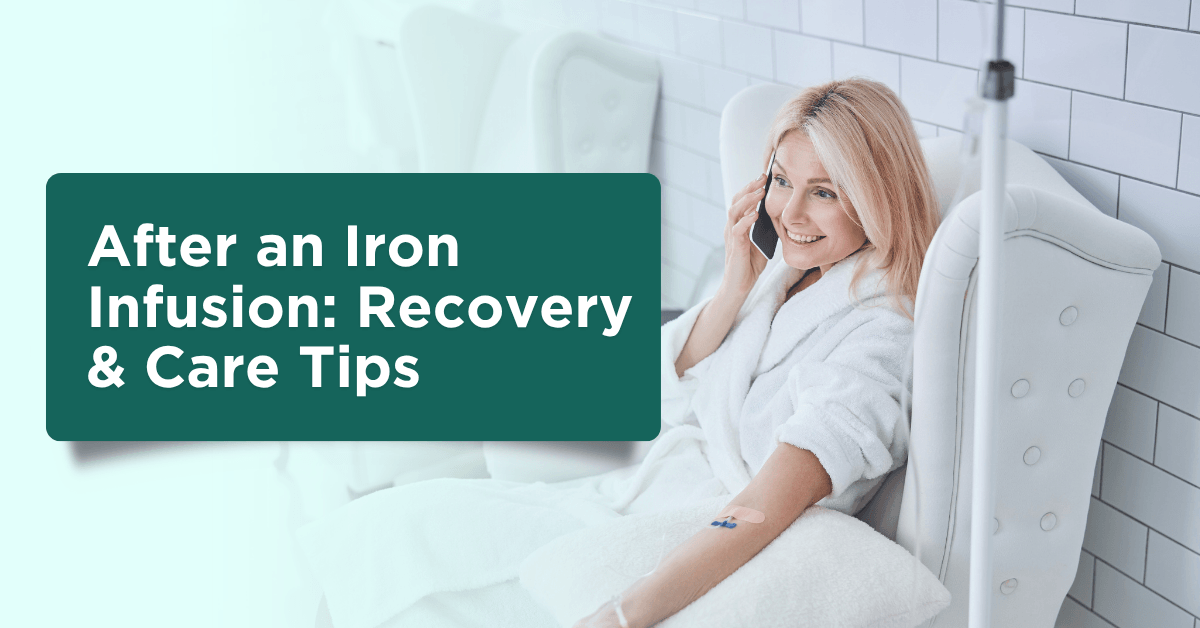
Iron infusions are an effective treatment for iron deficiency when oral iron supplements are unsuitable, poorly tolerated, or have not restored iron levels adequately. Many people notice an improvement in their energy levels over the weeks following treatment, but it’s also normal to have questions about what to expect immediately afterwards.
One of the most common concerns is whether it is safe to drive after an iron infusion. The answer depends on how you feel after the procedure and whether you experience any side effects. Understanding what to expect can help you recover comfortably and know when to seek medical advice.
What Happens After an Iron Infusion?
An iron infusion delivers iron directly into your bloodstream through a vein, allowing your body to replenish its iron stores more quickly than oral supplements.
After the infusion, your healthcare team will usually ask you to remain at the clinic for a short observation period. This allows staff to monitor for any immediate reactions before you go home.
Most people are able to return home the same day and resume light daily activities.
Can You Drive After an Iron Infusion?
In most cases, yes, you can drive after an iron infusion if you feel well and have not experienced any side effects.
However, you should not drive if you experience symptoms such as:
- Dizziness or light-headedness
- Feeling faint
- Blurred vision
- Significant fatigue
- Nausea
- Any allergic reaction
If you feel unwell after your treatment, arrange for someone to drive you home or use alternative transport.
Even if you feel well immediately afterwards, consider taking it easy for the rest of the day, particularly if this is your first iron infusion.
Common Iron Infusion Side Effects
Most side effects are mild and settle within a day or two.
Common iron infusion side effects include:
- Mild headache
- Temporary muscle or joint aches
- Nausea
- Fatigue
- Mild flushing
- Metallic taste in the mouth
- Bruising or tenderness at the infusion site
Some people experience temporary flu-like symptoms during the first 24–48 hours. These usually resolve without treatment.
Serious allergic reactions are uncommon but can occur. This is why monitoring immediately after the infusion is important.
Iron Infusion Recovery: What Can You Expect?
Recovery after an iron infusion is generally straightforward.
Your body gradually uses the infused iron to produce healthy red blood cells, a process that takes time.
Many people begin noticing improvements in symptoms such as:
- Increased energy
- Reduced fatigue
- Improved concentration
- Better exercise tolerance
- Reduced shortness of breath related to iron deficiency
While some people feel better within a few days, others may not notice significant improvement for several weeks.
Iron Infusion Post Care Tips
Following a few simple measures can help support your recovery.
Stay Hydrated
Drink plenty of water during the day following your infusion, unless your doctor has advised otherwise.
Hydration may help reduce headaches and support your overall recovery.
Rest if Needed
While many people return to normal activities, it is perfectly reasonable to take the remainder of the day a little more slowly if you feel tired.
Listen to your body and avoid pushing through fatigue.
Eat a Balanced Diet
Continue eating a healthy, balanced diet containing iron-rich foods such as:
- Lean red meat
- Poultry
- Seafood
- Legumes
- Leafy green vegetables
- Iron-fortified cereals
Vitamin C-rich foods may also help support iron absorption from dietary sources.
Monitor the Infusion Site
Some mild tenderness or bruising is common.
Contact your healthcare provider if you notice:
- Increasing pain
- Significant swelling
- Redness spreading from the site
- Persistent bleeding
When Should You Seek Medical Attention?
Although complications are uncommon, seek urgent medical attention if you develop:
- Difficulty breathing
- Swelling of the face, lips, or throat
- Severe rash or hives
- Chest pain
- Persistent dizziness or fainting
- Severe or worsening pain around the infusion site
You should also contact your healthcare provider if your symptoms persist or worsen over the following days.
Frequently Asked Questions
How long should I rest after an iron infusion?
Most people only need to rest on the day of the infusion if they feel tired. Normal activities can usually be resumed the following day if you are feeling well.
Can I exercise after an iron infusion?
Light activity is generally fine if you feel well. It may be sensible to avoid strenuous exercise on the day of your infusion, particularly if you experience fatigue or dizziness.
When will I start feeling better?
Many people notice improvements within one to three weeks, although this varies depending on the severity of the iron deficiency and individual response to treatment.
Do I still need iron tablets after an infusion?
Some people may continue taking oral iron supplements after an infusion, while others may not. Follow your doctor’s advice based on your blood test results and underlying condition.
The Bottom Line
Most people recover well after an iron infusion and can safely return home the same day. If you feel well and have no dizziness or other concerning symptoms, driving is generally safe. However, if you feel unwell, arrange alternative transport and allow yourself time to rest.
Knowing what to expect after an iron infusion, recognising common side effects, and following simple post-care advice can help make your recovery as comfortable as possible. If you have any concerns after your treatment, contact your healthcare provider for personalised advice.
Looking for iron infusion treatment? Learn more about our Iron Infusion Services and speak with our team to find out whether an iron infusion is appropriate for you.
References
- Australian Red Cross Lifeblood – Iron Deficiency and Iron Infusions
https://www.lifeblood.com.au
- Healthdirect Australia – Iron Deficiency
https://www.healthdirect.gov.au/iron-deficiency
- Better Health Channel – Iron Deficiency
https://www.betterhealth.vic.gov.au
- Royal Australian College of General Practitioners (RACGP) – Iron Deficiency Management
https://www.racgp.org.au
- National Blood Authority Australia – Patient Blood Management Guidelines
https://www.blood.gov.au
- Therapeutic Guidelines Australia – Iron Deficiency Anaemia (subscription resource)
https://www.tg.org.au