Australia has one of the highest rates of skin cancer in the world, making regular skin awareness and early assessment an important part of preventive healthcare.
Many people know they should have their skin checked but are unsure what actually happens during the appointment. Questions about what the doctor looks for, whether clothing needs to be removed, and how long the examination takes can sometimes make people delay booking a skin check.
The good news is that a GP skin cancer check is generally straightforward, confidential and designed to help identify skin changes that may require further attention.
If you are considering booking a skin cancer check Cranbourne West appointment, here is what you can typically expect.
Why Are Skin Checks Important?
Skin cancer can develop in areas frequently exposed to the sun, but it may also occur in places that receive little or no sun exposure.
Many skin cancers are highly treatable when identified early. Regular skin checks allow changes in the skin to be assessed before they become more advanced.
A skin check may be especially important if you spend significant time outdoors, have fair skin, have a history of sunburn, have a family history of skin cancer, notice changes in a mole or lesion, have multiple moles or freckles, or have previously been diagnosed with skin cancer.
Your GP can help determine whether regular skin checks are appropriate for your individual circumstances.
Cranbourne West Medical Centre provides skin cancer checks with full-body dermatoscopy, biopsies, excisions and skin cancer management where clinically appropriate.
What Is a GP Skin Cancer Check?
A GP skin cancer check is a clinical examination of your skin performed by a doctor.
The purpose of the appointment is to assess moles, freckles, spots, lesions, areas of skin change and new or unusual skin growths.
The examination helps identify any areas that may require monitoring, further investigation, biopsy, treatment or referral.
It is important to remember that not every mole or skin change is cancerous. Many skin lesions are harmless, but any concerns should be assessed by a healthcare professional.
A skin cancer check Cranbourne West appointment can provide reassurance, early detection support and clear next steps if something needs closer review.
7 Things to Expect During a GP Skin Cancer Check
Knowing what happens during the appointment can make the process feel less intimidating.
1. Your GP Will Ask About Your Skin History
Your GP will usually begin by asking questions about your skin concerns and risk factors.
This may include family history of skin cancer, previous skin cancers, sun exposure, sunburn history, outdoor work, tanning history, immune system conditions and any recent changes you have noticed.
Your doctor may also ask whether a mole has changed in size, shape, colour, border, symptoms or appearance.
This discussion helps guide the examination and determine which areas need closer attention.
If you have a specific spot you are worried about, mention it early in the appointment.
2. You May Have a Focused or Full-Body Skin Check
The type of skin check depends on the reason for your appointment, your risk factors and the type of examination being performed.
Some appointments focus on one mole or lesion. Others may involve checking multiple areas or performing a full-body skin examination.
If a full-body examination is recommended, your GP will explain what is involved and support your privacy and comfort throughout the appointment.
You may be asked to remove some clothing, but this should be done respectfully and only as needed for the assessment.
You can ask questions or request clarification at any stage.
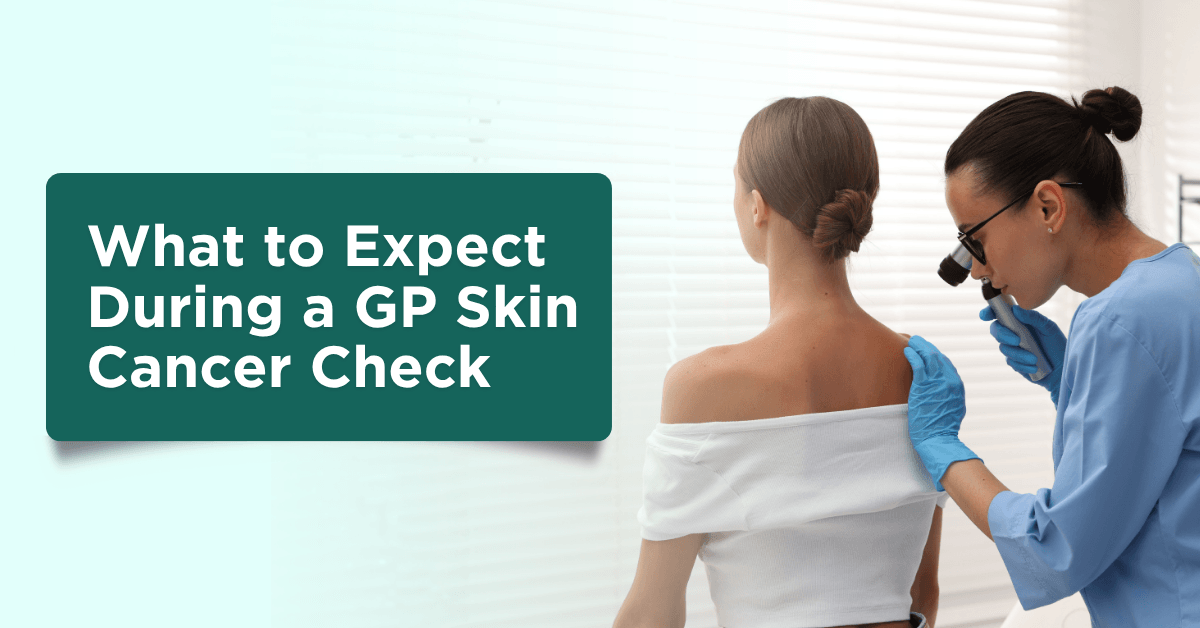
3. Your GP May Use a Dermatoscope
One of the most common tools used during a skin cancer check is a dermatoscope.
A dermatoscope is a specialised handheld device that allows the doctor to view skin structures in more detail than the naked eye can see.
It may help assess patterns, colours and features within moles or skin lesions.
Using a dermatoscope does not mean the spot is cancerous. It simply helps your doctor examine the skin more closely.
Cranbourne West Medical Centre’s skin cancer service includes full-body dermatoscopy for patients needing professional mole and skin lesion assessment.
4. Your Doctor Will Look for New, Changing or Unusual Spots
During the examination, your doctor may assess size, shape, colour, border, symmetry, texture and whether a lesion has changed.
They may look for moles that appear different from your other moles, sometimes called an “ugly duckling” sign.
They may also assess spots that bleed, itch, crust, become painful, fail to heal or appear suddenly in adulthood.
SunSmart Victoria notes that skin cancer can appear as an existing spot that changes in colour, size or shape, or as a new or unusual spot, lump or sore that does not heal.
If you notice any of these signs, book a GP review rather than waiting to see if it disappears.
5. A Routine Skin Check Is Usually Painless
A routine skin examination is generally painless.
The assessment usually involves looking at the skin, using a dermatoscope and discussing findings with your doctor.
If further testing or treatment is needed, such as biopsy or removal, your doctor will explain the process before proceeding.
A biopsy or excision is a separate procedure or planned step and is not the same as a routine visual skin check.
Your GP should explain why it is being recommended, what the procedure involves, possible risks, costs, aftercare and follow-up.
6. You May Be Asked to Return for Monitoring
Not every spot needs removal.
If a lesion does not appear immediately concerning but should be watched, your GP may recommend monitoring over time.
This may include clinical notes, photographs, measurements or a follow-up appointment to check for change.
Monitoring can be useful when a lesion needs observation but does not clearly require immediate biopsy.
However, if a spot looks suspicious, your GP may recommend biopsy, excision or referral rather than waiting.
The next step depends on the individual findings.
7. You Will Receive Practical Advice for Ongoing Skin Care
A skin cancer check is also an opportunity to discuss prevention and self-monitoring.
Your GP may explain how often to check your skin, what changes to look for, when to book another appointment and how to reduce UV exposure.
They may also discuss sun protection, including sunscreen, hats, protective clothing, shade and sunglasses.
Skin checks and sun protection work together. One helps detect changes early, while the other helps reduce future UV damage.
For many patients, a skin cancer check Cranbourne West appointment can provide both assessment and practical prevention advice.
Before Your Appointment
There is generally very little preparation required before a skin check, but a few simple steps may help your doctor perform a more thorough assessment.
If possible, avoid heavy makeup, especially on the face and neck. Remove nail polish if you are having a full-body skin check, as skin cancers can occasionally occur around or under nails.
Make a note of any areas of concern, including a new mole, changing mole, sore that will not heal, spot that bleeds easily or any unusual skin change.
Wear comfortable clothing that is easy to adjust or remove if needed.
If you have previous skin biopsy results, specialist letters or photos of changing moles, bring them to the appointment.
What Happens During the Appointment?
The exact process may vary depending on your medical history and reason for attending.
Your GP will usually begin with a discussion about your skin concerns, family history, previous skin cancers, sun exposure history and any recent changes you have noticed.
Your GP will then examine your skin. Depending on the appointment, this may involve looking at a specific lesion, examining multiple areas or performing a full-body skin check.
Your doctor will explain what is involved before beginning the examination.
If any lesion needs further assessment, your GP will discuss the next steps clearly.
Will the Doctor Check My Whole Body?
Many people ask whether a skin cancer check involves a full-body examination.
The answer depends on the reason for your appointment, your risk factors and the type of skin check being performed.
If you are attending for one specific mole, your GP may focus on that spot while also asking about broader skin risk.
If you are having a full-body skin check, the doctor may examine areas such as the face, scalp, ears, neck, chest, back, arms, hands, legs and feet.
Privacy and comfort are important. Your GP should explain the process and use appropriate draping where needed.
If you feel uncomfortable, tell your doctor.
How Does a Doctor Check Moles?
One of the most common reasons people book a skin check is concern about a mole.
During the examination, your doctor may assess size, shape, colour, borders, symmetry, texture and any recent changes.
They may use a dermatoscope to look more closely at skin structures.
Doctors may also use the ABCDE rule when assessing concerning moles. This stands for asymmetry, border irregularity, colour variation, diameter and evolving change over time.
However, not every skin cancer follows a perfect pattern. Any new, changing, bleeding, itchy or non-healing lesion should be reviewed.
A skin cancer check Cranbourne West appointment can help determine whether a mole is reassuring, needs monitoring or requires further investigation.
What Skin Changes Should Be Assessed?
It is generally recommended that you arrange a medical review if you notice a new mole appearing in adulthood, a mole that changes size, shape or colour, a spot that looks different from surrounding moles, a sore that does not heal, persistent itching or bleeding from a lesion, or any skin change that concerns you.
Cancer Council Australia advises people to get to know their skin and look for new spots or changes to existing freckles or moles.
Skin cancers rarely hurt and are more often seen than felt, so visual changes matter.
Not all changes indicate skin cancer, but assessment can provide reassurance or identify whether further investigation is required.
What Happens If Something Unusual Is Found?
If your GP identifies a lesion that requires further assessment, several options may be discussed.
Depending on the findings, this may include monitoring the area over time, taking clinical photographs, arranging a follow-up review, performing a biopsy, excising the lesion or referring to a specialist if appropriate.
Cranbourne West Medical Centre provides on-site biopsy and excision where clinically appropriate through its skin cancer service.
The next steps will depend on your individual circumstances and clinical findings.
Your GP should explain why a particular option is recommended and what follow-up is needed.
Does a Skin Check Hurt?
A routine skin examination is generally painless.
The assessment involves visual examination of the skin and does not usually involve invasive procedures.
A dermatoscope touches or comes close to the skin but should not be painful.
If additional testing or treatment is required, such as biopsy or excision, your doctor will explain the process beforehand.
You should feel comfortable asking what is happening at any stage.
How Often Should You Have a Skin Check?
There is no single skin check schedule that applies to everyone.
The frequency of skin checks depends on personal history of skin cancer, family history, skin type, number of moles, sun exposure history, immune status and individual risk factors.
Some people may need regular planned checks. Others may only need review when they notice a new or changing spot.
Your GP can provide advice tailored to your circumstances.
If you are unsure how often you should be checked, booking a skin cancer check Cranbourne West appointment can help clarify your risk.
Protecting Your Skin Between Checks
Regular skin checks are only one part of skin cancer prevention.
Everyday sun protection remains important.
Practical measures include wearing protective clothing, using broad-spectrum sunscreen, wearing a hat, seeking shade when possible, wearing sunglasses and avoiding excessive UV exposure.
It is also helpful to check your own skin regularly and become familiar with what is normal for you.
Ask someone you trust to check areas you cannot easily see, such as your back, scalp or the back of your neck.
If something changes, do not wait for your next routine appointment. Book a GP review.
Skin Checks in Cranbourne West
If you have concerns about a mole, notice a change in your skin or simply want to discuss whether a skin check is appropriate, speaking with your GP is a good place to start.
At Cranbourne West Medical Centre, the team can assess skin concerns, discuss individual risk factors and advise on appropriate follow-up where required.
The clinic provides full-body dermatoscopy, skin cancer assessment, biopsies, excisions and surgical repair where clinically appropriate.
You can learn more through Cranbourne West Medical Centre’s Skin Cancer Checks page or book an appointment online.
Common Myths About GP Skin Cancer Checks
Myth 1: Skin Cancer Always Hurts
Skin cancers often do not hurt in the early stages. Many are noticed visually before they are felt.
Myth 2: A Skin Check Always Means a Full-Body Examination
Some skin checks focus on one lesion, while others involve a full-body examination. Your GP will explain what is appropriate.
Myth 3: Every Suspicious Mole Is Removed Immediately
Some lesions may be monitored, photographed, biopsied, excised or referred depending on the findings.
Myth 4: Only Fair-Skinned People Need Skin Checks
Fair skin increases risk, but people of all skin tones can develop skin cancer. Any new or changing spot should be assessed.
Myth 5: Sunscreen Means You Do Not Need Skin Checks
Sun protection helps reduce risk, but it does not remove the need for skin awareness or medical assessment of changes.
Final Thoughts
A GP skin cancer check is usually straightforward, confidential and focused on early detection.
Your doctor may review your risk factors, examine your skin, assess moles with a dermatoscope and recommend monitoring, biopsy, excision or referral if needed.
If you have noticed a new mole, changing spot, non-healing sore or any skin change that concerns you, it is worth booking a review.
For local patients, a skin cancer check Cranbourne West appointment at Cranbourne West Medical Centre can provide professional assessment and clear next steps.
Frequently Asked Questions
How long does a GP skin cancer check take?
Appointment times vary depending on whether the visit is focused on one lesion or a more comprehensive skin examination.
Can a GP check moles?
Yes. GPs commonly assess moles and other skin lesions and can advise whether monitoring, biopsy, removal or referral is needed.
Do I need a referral for a skin check?
In most cases, a referral is not required to book an appointment with a GP for a skin assessment.
Should I get a skin check if I have no symptoms?
Many people discuss skin checks with their GP based on individual risk factors, even if they have not noticed a specific symptom.
Does a skin check hurt?
A routine skin check is generally painless. If biopsy or removal is needed, your GP will explain the procedure beforehand.
What should I do before a skin check?
Avoid heavy makeup if possible, remove nail polish for full-body checks, wear comfortable clothing and note any spots you are concerned about.
Where can I book a skin cancer check Cranbourne West?
You can book a skin cancer check Cranbourne West appointment at Cranbourne West Medical Centre for mole checks, dermatoscopy and skin cancer assessment.
References
https://www.cancer.org.au/cancer-information/types-of-cancer/skin-cancer
https://www.sunsmart.com.au/skin-cancer/checking-for-skin-cancer
https://www.sunsmart.com.au/protect-your-skin
https://www.betterhealth.vic.gov.au/health/conditionsandtreatments/skin-cancer
https://www.aihw.gov.au/reports/cancer/skin-cancer-in-australia
Medical Disclaimer
This blog is for general informational purposes only and does not constitute medical advice. Skin cancer risk, skin check frequency and treatment options vary between individuals. Please speak with a qualified GP or skin cancer doctor for advice specific to your circumstances.