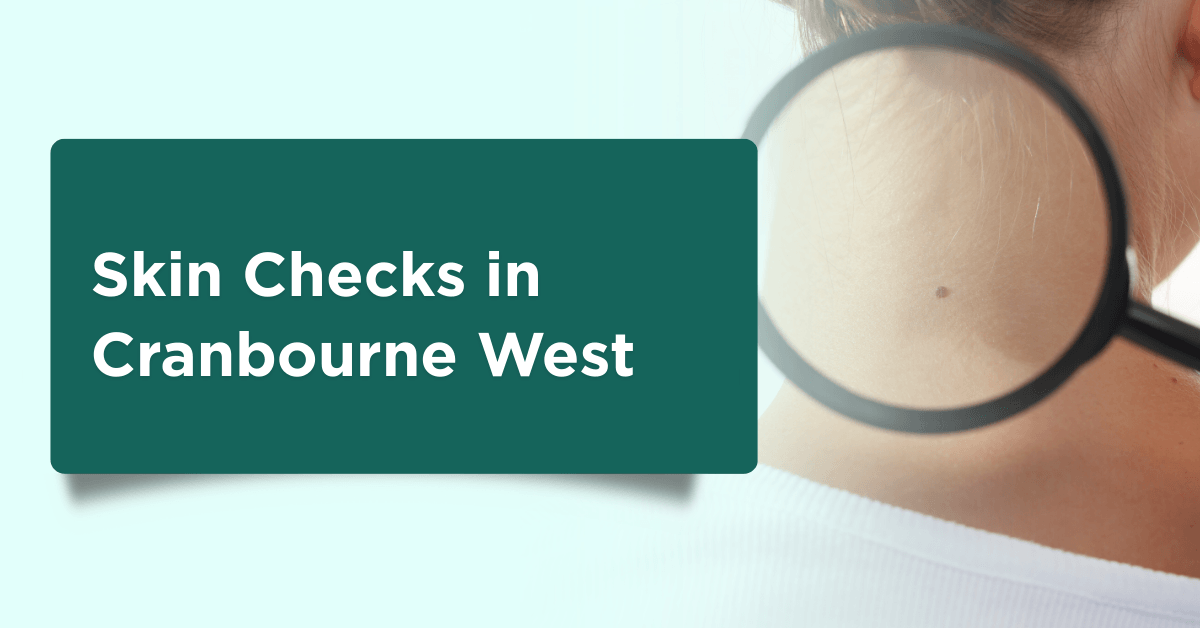
Australia has one of the highest rates of skin cancer in the world, largely due to high levels of ultraviolet radiation exposure. Because of this, routine skin examinations are an important part of preventive healthcare.
A professional skin check allows doctors to identify suspicious moles, spots or skin changes early, often before they become more serious. Early detection can improve treatment options and help reduce the risk of complications.
For residents in Cranbourne West and across Australia, scheduling regular skin checks can play an important role in maintaining long-term skin health. A skin check Cranbourne West appointment can help assess your skin, review risk factors and guide next steps if a suspicious lesion is found.
Why Skin Cancer Screening Is Important
Skin cancer can develop gradually and may not cause obvious symptoms in its early stages. Regular skin cancer screening helps doctors detect abnormal skin changes that may require monitoring, biopsy or treatment.
A skin check can help identify new or changing moles, unusual skin growths, spots that bleed or itch, sores that do not heal, and changes in the colour, size or shape of existing moles.
These changes can sometimes indicate early signs of skin cancer, which is why early evaluation by a GP or skin cancer doctor is recommended.
Cranbourne West Medical Centre provides skin cancer checks for patients who want professional assessment of moles, sun damage and suspicious skin changes.
6 Reasons Regular Skin Checks Matter
Regular skin checks are not only for people who already have a suspicious mole. They are part of proactive skin health, especially in a high-UV country like Australia.
1. Skin Cancer Can Be Easy to Miss
Skin cancer does not always look dramatic. Some lesions may appear as a small spot, a subtle colour change, a rough patch, a sore that does not heal, or a mole that slowly changes over time.
Many skin cancers are more likely to be noticed visually than felt physically. They may not hurt, itch or bleed in the early stages.
This is why checking your skin regularly matters. A professional skin check Cranbourne West appointment can help identify changes that may not be obvious during everyday routines.
Doctors trained in skin assessment can examine areas that are hard to see, such as the back, scalp, shoulders, behind the ears and backs of the legs.
2. Early Detection Can Improve Outcomes
One of the main goals of routine skin checks is early skin cancer detection.
When skin cancer is identified early, treatment is often more straightforward. In some cases, early detection may allow suspicious lesions to be removed before they become larger, deeper or more complex.
Early assessment also reduces the chance of ignoring a concerning spot for too long.
This is especially important for melanoma, which can become serious if not detected and treated early.
A skin check Cranbourne West consultation can help provide timely assessment and advice if you have noticed a new, changing or unusual spot.
3. Dermatoscopy Can Help Examine Skin More Closely
During a GP skin check, your doctor may use a dermatoscope. This is a specialised tool that allows closer inspection of moles and skin lesions.
Dermatoscopy can help doctors assess patterns, colours and structures that are not always visible to the naked eye.
This does not mean every spot requires removal. Some lesions may simply be monitored, photographed or reviewed again later. Others may need biopsy or excision if they appear suspicious.
Cranbourne West Medical Centre’s skin cancer service includes full-body dermatoscopy and access to on-site biopsy and excision where clinically appropriate.
4. Risk Factors Can Change Over Time
Your skin cancer risk is influenced by many factors, including UV exposure, skin type, family history, number of moles, previous skin cancer, immune system status and sunburn history.
Risk can also change over time. A person who spent years working outdoors, played sport in the sun, used tanning beds, had repeated sunburns or has a family history of melanoma may need closer monitoring.
Your GP can assess your individual risk and recommend how often you should have a skin check.
For some people, annual checks may be appropriate. Higher-risk patients may need more frequent review, while lower-risk patients may need less frequent checks but should still monitor their skin.
A skin check Cranbourne West appointment can help you understand your personal risk rather than relying on a general rule.
5. Skin Checks Support Prevention Advice
A professional skin check is also an opportunity to discuss skin cancer prevention.
Your GP may discuss sun protection habits, sunscreen use, protective clothing, hats, sunglasses, shade, UV index awareness and avoiding tanning.
Sun protection is especially important in Australia because ultraviolet radiation can damage skin even on cool or cloudy days.
Skin checks and sun protection work together. Sunscreen and protective behaviour help reduce future risk, while skin checks help detect suspicious changes early.
If you have signs of sun damage, your doctor can explain what to monitor and when to return for review.
6. Regular Checks Build a Skin History
One skin check gives useful information, but repeated checks can be even more helpful because they create a record of your skin over time.
Your doctor may note which moles are stable, which spots need monitoring and which changes require closer attention.
This can make it easier to detect subtle changes in future visits.
If you have many moles or previous skin cancer, continuity of care can be especially valuable.
Booking a regular skin check Cranbourne West appointment can help support long-term monitoring and early detection.
What Happens During a GP Skin Check?
A GP skin check is a straightforward examination that usually takes a short amount of time, although this may vary depending on your skin type, number of spots and concerns.
During the appointment, your doctor may review your medical history, sun exposure, family history and any spots you are worried about.
They may then examine your skin from head to toe or focus on specific areas, depending on the type of appointment and your risk factors. A dermatoscope may be used to view moles and lesions more closely.
Your doctor may recommend monitoring, photography, biopsy, excision or referral if needed.
Patients are encouraged to point out any skin changes they have noticed. Do not assume a spot is too small or unimportant to mention.
When Should You See a Doctor to Check Moles?
You should consider seeing a doctor to check moles if you notice a mole that changes in size, colour or shape, a spot that bleeds, itches or becomes painful, a new mole appearing in adulthood, or a lesion that does not heal.
Doctors often recommend following the ABCDE rule when observing moles.
A stands for asymmetry, where one half looks different from the other. B stands for border, especially irregular or uneven edges. C stands for colour, including multiple colours or uneven shading. D stands for diameter, particularly larger or growing lesions. E stands for evolving, meaning any change over time.
The E for evolving is especially important. Any mole or spot that changes should be assessed.
If you notice any of these signs, book a GP review. A skin check Cranbourne West appointment can help determine whether the change is harmless, needs monitoring or requires treatment.
Who Should Have Regular Skin Checks?
While everyone can benefit from routine monitoring, certain individuals may have a higher risk of skin cancer.
You may be encouraged to have regular skin checks if you have fair skin, light hair, many moles, a family history of skin cancer, previous skin cancer, a history of sunburn, high outdoor sun exposure, tanning bed exposure, or a weakened immune system.
Outdoor workers, athletes, gardeners, tradies and people who spend long hours in the sun may also benefit from regular review.
Your GP can advise how often you should schedule a skin examination based on your individual risk factors.
Even if you have darker skin, skin cancer can still occur. Any new, changing or non-healing spot should be checked.
Skin Check Clinic in Cranbourne West
If you would like to schedule a skin examination, Cranbourne West Medical Centre provides local skin cancer checks and minor procedures to support early detection and treatment of suspicious skin lesions.
The clinic offers full-body dermatoscopy and on-site biopsy, excision and surgical repair where clinically appropriate.
You can learn more through Cranbourne West Medical Centre’s Skin Cancer Checks page or book an appointment online.
A skin check Cranbourne West appointment can help you assess suspicious moles, review skin cancer risk and receive advice about next steps.
How to Check Your Skin at Home
Professional skin checks are important, but self-checks also matter.
Try to become familiar with what is normal for your skin. Check your face, ears, neck, scalp, chest, arms, hands, legs, feet, soles, back and areas that are hard to see.
Use a mirror or ask someone you trust to check your back, scalp and back of the neck.
Look for new spots, changing moles, unusual colours, bleeding, itching, crusting, sores that do not heal, or spots that look different from others.
If you notice anything unusual, do not wait for your next routine check. Book a GP appointment.
Protecting Your Skin Health
Regular skin cancer screening is one of the most effective ways to support early detection.
By scheduling routine GP skin checks, monitoring your skin and seeking medical advice when changes occur, you can take proactive steps to protect your health.
Sun protection remains essential. Use broad-spectrum sunscreen, wear protective clothing, seek shade, wear a hat and sunglasses, and check the UV index before spending time outdoors.
Early detection and prevention work best together.
Common Myths About Skin Checks
Myth 1: Skin Cancer Always Hurts
Skin cancers often do not hurt in the early stages. A painless spot can still be worth checking.
Myth 2: Only Fair-Skinned People Need Skin Checks
Fair skin increases risk, but people of all skin tones can develop skin cancer. Any changing or non-healing lesion should be assessed.
Myth 3: A Mole Is Fine If It Has Been There for Years
Long-standing moles can still change. New changes in size, colour, border, shape or symptoms should be checked.
Myth 4: Sunscreen Means I Do Not Need Skin Checks
Sunscreen helps reduce risk but does not remove all risk. Skin monitoring and professional checks remain important.
Myth 5: Small Spots Are Not Serious
Some concerning skin cancers can begin as small or subtle changes. Size alone should not be the only factor.
Final Thoughts
Regular skin checks are an important part of preventive healthcare in Australia.
They help identify suspicious moles, changing spots and early signs of skin cancer before problems become more advanced.
If you live in Cranbourne West or nearby, a professional skin check Cranbourne West appointment can provide reassurance, early detection support and practical advice about protecting your skin.
Do not wait for a spot to become painful or obvious. If something looks new, different or changing, book a review.
Frequently Asked Questions
What happens during a skin check?
A doctor reviews your risk factors, examines your skin and may use a dermatoscope to assess moles or lesions more closely. They may recommend monitoring, biopsy, removal or referral if needed.
How often should I have a skin check?
This depends on your risk factors, including skin type, family history, sun exposure, number of moles and previous skin cancer. Your GP can recommend a suitable schedule.
When should I get a mole checked?
You should get a mole checked if it changes in size, shape or colour, becomes itchy or painful, bleeds, crusts, does not heal, or looks different from your other spots.
Is a skin check painful?
A skin check itself is usually not painful. If a biopsy or removal is needed, your doctor will explain the procedure and local anaesthetic options.
Where can I book a skin check Cranbourne West?
You can book a skin check Cranbourne West appointment at Cranbourne West Medical Centre for mole checks, full-body dermatoscopy and assessment of suspicious skin changes.
References
https://www1.racgp.org.au/ajgp/2024/august/skin-cancer-prevention-in-australia-1
https://www.betterhealth.vic.gov.au/health/conditionsandtreatments/skin-cancer
https://www.health.gov.au/topics/cancer/about-cancer/skin-cancer
https://melanoma.org.au/wp-content/uploads/2024/07/Know-The-Skin-Youre-in.pdf