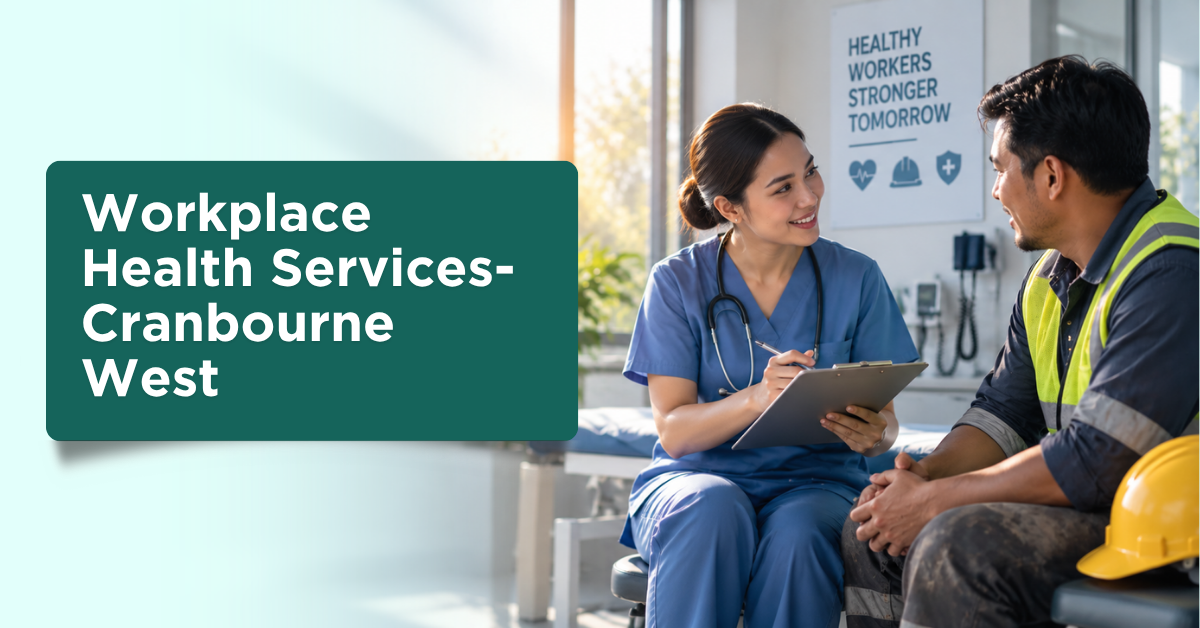
Healthy workplaces don’t happen by accident. From managing occupational risks to supporting workers returning after illness or injury, employers have an important role in creating working environments that protect health and safety.
That’s where workplace health services can contribute. Depending on the workplace and the risks involved, occupational healthcare may include pre-employment medical assessments, health monitoring, vaccination programs, injury management and other services tailored to the organisation and its workforce.
For businesses in Cranbourne West and surrounding areas, appropriately designed workplace health initiatives can complement, not replace, effective workplace health and safety systems.
What Are Workplace Health Services?
Workplace health services are healthcare and occupational health activities designed around the health needs and risks of employees and workplaces.
Depending on the organisation, these services may include:
- Pre-employment medical assessments
- Fitness-for-work assessments
- Occupational health monitoring
- Workplace vaccinations
- Injury assessment and management
- Return-to-work support
- Drug and alcohol testing where appropriate
- Hearing or respiratory assessments where clinically or occupationally indicated
- Health education
- Preventive health initiatives
The exact services required will vary according to the industry, employee’s role, workplace hazards, and relevant legal obligations.
For example, a construction business may have very different occupational health requirements from an office-based organisation.
Why Does Workplace Health Matter?
Australians spend a significant amount of time at work, making workplaces an important setting for health and safety.
Work-related hazards can include:
- Hazardous chemicals
- Noise
- Dust
- Manual handling
- Repetitive movements
- Machinery
- Prolonged sitting
- Psychosocial hazards
- Fatigue
- Infectious disease exposure
- Other industry-specific risks
Under Victoria’s occupational health and safety framework, employers have duties to provide and maintain, so far as reasonably practicable, a working environment that is safe and without risks to health.
Healthcare services can form one part of an organisation’s broader approach to managing these risks.
1. Employee Health Assessments Can Help Determine Fitness for Particular Work
An employee’s health assessment may sometimes be requested before a person starts a particular role or when their work circumstances change.
The purpose should be relevant to the inherent requirements and health risks associated with the job.
Depending on the position, an assessment might involve:
- Medical history
- Physical assessment
- Vision assessment
- Hearing assessment
- Respiratory assessment
- Musculoskeletal assessment
- Functional capacity considerations
- Other job-specific investigations
Not every employee requires the same tests.
A desk-based employee, for example, is unlikely to require exactly the same assessment as someone working with hazardous substances, operating heavy machinery or performing physically demanding work.
Assessments should be appropriately targeted to the requirements and risks of the role.
2. Occupational Health Programs Can Help Address Workplace Risks
An effective occupational health program begins with understanding the hazards workers may encounter. Workplace health services can support businesses by providing appropriate medical assessments, health monitoring and other occupational health support based on workplace requirements.
However, medical testing should not be treated as the primary method of controlling those hazards.
Safe Work Australia applies the hierarchy of controls to workplace risks. Eliminating a hazard is the most effective approach where reasonably practicable, followed by measures such as substitution, isolation, and engineering controls before relying on administrative controls or personal protective equipment.
For example, regularly testing an employee’s lung function does not make excessive exposure to hazardous dust acceptable.
Health services can complement effective hazard controls, but they do not replace an employer’s responsibility to manage risks at their source.
3. Health Monitoring May Be Required for Certain Hazardous Exposures
The term “health monitoring” has a specific meaning in occupational health and safety.
Safe Work Australia describes health monitoring as monitoring a person to identify changes in their health resulting from exposure to certain hazardous chemicals. It can involve medical examinations or biological monitoring.
Depending on the substance and regulatory requirements, health monitoring may involve:
- Medical history
- Physical examination
- Lung function testing
- Blood tests
- Urine tests
- Other biological monitoring
Importantly, health monitoring is not the same as a general employee wellness check. Workplace health services may include health monitoring where it is appropriate or required, but businesses need to understand which requirements apply to their specific workplace and workforce.
Businesses should determine their obligations according to the hazards present, applicable Victorian legislation and relevant occupational health and safety requirements. Where health monitoring is required, obtaining appropriate medical support can help businesses manage the process and support employee health.
For businesses considering medical assessments for employees, it may also be useful to understand how fitness-to-work assessments support workplace safety and employee wellbeing and when these assessments may be appropriate.
4. Workplace Vaccination Programs May Be Appropriate for Some Businesses
Vaccination can form part of workplace health initiatives, particularly where workers have occupational exposure to vaccine-preventable diseases.
Depending on the workplace, this might include consideration of vaccinations relating to:
- Influenza
- Hepatitis A
- Hepatitis B
- Tetanus
- Other occupationally relevant diseases
The Australian Immunisation Handbook provides specific recommendations for people at occupational risk of certain vaccine-preventable diseases.
The vaccinations appropriate for a workforce depend on factors such as the nature of the work, exposure risks, and individual employee circumstances.
Vaccination should therefore be based on appropriate risk assessment and current Australian recommendations rather than automatically giving every employee the same vaccines.
5. Workplace Health Services Can Support Injury Management
When an employee is injured, healthcare may be required to assess the injury and determine appropriate treatment.
Depending on the circumstances, this can involve:
- Initial medical assessment
- Treatment
- Referrals
- Certificates of capacity
- Rehabilitation
- Follow-up appointments
- Communication relevant to return-to-work planning
In Victoria, employers have specific obligations relating to return to work for employees with work-related injuries. WorkSafe Victoria notes that employers must support workers in returning to safe work and meet applicable return-to-work obligations.
Healthcare professionals can provide clinical information about an employee’s functional capacity, while employers remain responsible for workplace arrangements and compliance with relevant requirements.
6. Return-to-Work Support Can Focus on What an Employee Can Safely Do
Returning to work does not always mean immediately resuming every previous duty.
Depending on the employee’s condition, temporary adjustments may sometimes be appropriate.
These could include changes to:
- Working hours
- Physical duties
- Manual handling
- Workload
- Workstation setup
- Tasks
- Breaks
A healthcare professional may provide information about the person’s current functional capacity and restrictions where clinically appropriate.
This can help employers and employees consider safe work arrangements during recovery.
7. Workplace Health Is More Than Physical Health
Employee wellbeing isn’t limited to physical injuries. Workplace health services can also support employees experiencing health concerns that may be connected to psychological or psychosocial risks at work.
WorkSafe Victoria recognises that psychosocial hazards can cause psychological or physical harm. Examples can include poor organisational justice, bullying, aggression or violence, sexual harassment, high job demands and low job control.
This means workplace health and safety systems should consider both physical and psychological risks. Appropriate workplace health services may provide medical support when employees experience health concerns, but healthcare alone cannot remove or control the underlying workplace hazard.
Providing employees with counselling or health assessments should not be used as a substitute for addressing harmful workplace conditions. Where a workplace hazard is contributing to poor health, employers should consider how that hazard can be appropriately identified, controlled and reviewed.
8. Corporate Health Services Can Make Healthcare Easier to Coordinate
For organisations managing multiple employees, coordinating occupational health requirements can become complicated.
Structured corporate health services may help businesses coordinate relevant healthcare activities, such as:
- Role-specific assessments
- Vaccination programs
- Occupational testing
- Injury management
- Return-to-work assessments
- Health monitoring
The appropriate model depends on the size of the workforce, industry, and occupational risks.
Before implementing a program, businesses should clearly define what the service is intended to achieve, and ensure assessments are relevant to actual workplace requirements.
What Is the Difference Between Workplace Wellness and Occupational Health?
The terms workplace wellness and occupational health are sometimes used interchangeably, but they serve different purposes. Both can contribute to a healthier workforce, but occupational health is more closely connected to workplace hazards, employee fitness for work, injury management and health requirements related to specific jobs or exposures.
Understanding the difference can help businesses choose appropriate workplace health services and ensure that employee health initiatives are aligned with their workplace needs.
Workplace Wellness
Wellness initiatives may focus broadly on supporting healthy behaviours and employee wellbeing.
Examples might include:
- Health education
- Physical activity initiatives
- General health information
- Voluntary health assessments
- Wellbeing programs
Occupational Health
Occupational health focuses more specifically on the relationship between work and health.
This can include:
- Workplace hazards
- Occupational exposure
- Fitness for work
- Work-related illness and injury
- Health monitoring
- Rehabilitation
- Return to work
Both can form part of a workplace’s health strategy, but a general wellness program does not automatically satisfy an employer’s occupational health and safety obligations.
Are Pre-Employment Medical Assessments Necessary for Every Job?
No. Pre-employment of medical assessments should generally be relevant to the inherent requirements and risks associated with a particular role.
An employer should have a legitimate reason for requesting health information or medical testing.
Employers should also be mindful of privacy and discrimination requirements when collecting or using employee health information.
The Australian Human Rights Commission explains that employers can ask applicants about their ability to perform the inherent requirements of a job, but disability discrimination protections apply during recruitment and employment.
Employers considering pre-employment medical programs may therefore benefit from obtaining appropriate workplace relations or legal advice about their obligations.
What About Employee Medical Privacy?
Medical information is sensitive.
Businesses using workplace health services should have appropriate processes for:
- Obtaining consent
- Collecting only necessary information
- Protecting medical records
- Limiting access to sensitive information
- Communicating information appropriately
- Complying with applicable privacy obligations
Employers generally do not need unrestricted access to an employee’s complete medical history simply because an occupational health assessment has been conducted.
The information provided should be appropriate for the purpose of the assessment and relevant legal requirements.
Can Workplace Health Services Guarantee Workplace Safety?
No. Medical assessments, health monitoring and wellness initiatives can contribute to occupational healthcare, but they cannot guarantee that employees will remain healthy or that workplace incidents will not occur.
Workplace safety requires a broader system involving:
- Hazard identification
- Risk assessment
- Appropriate controls
- Safe systems of work
- Training and supervision
- Consultation with workers
- Monitoring and review
WorkSafe Victoria emphasises that employers must eliminate risks to health and safety so far as reasonably practicable or, where elimination is not reasonably practicable, reduce those risks so far as reasonably practicable.
Healthcare is one component, not a replacement for effective workplace risk management.
How Can Businesses Develop an Appropriate Workplace Health Program?
Rather than starting with a list of medical tests, businesses can first consider what health risks exist within their workplace.
A practical process may involve:
- Identifying workplace hazards.
- Assessing who may be exposed and how.
- Implementing appropriate risk controls.
- Determining whether specific health monitoring is legally required.
- Identifying other clinically appropriate occupational health services.
- Establishing processes for injury and return-to-work management.
- Reviewing the program as workplace risks change.
This helps ensure workplace health services are targeted to the actual needs of employees and the organisation.
When Should an Employee See a GP About a Workplace Health Concern?
Employees should consider seeking medical advice if they develop symptoms they believe may be related to work, including:
- Persistent pain
- Repetitive strain symptoms
- Hearing changes
- Breathing difficulties
- Skin reactions
- Symptoms following chemical exposure
- Work-related stress or psychological symptoms
- An injury sustained at work
- Other unexplained health changes associated with workplace exposure
Some situations, such as serious injury, severe breathing difficulty, or significant chemical exposure, may require urgent medical assessment rather than a routine appointment.
For a life-threatening emergency, call Triple Zero (000).
Supporting Workplace Health in Cranbourne West
Effective workplace health services can help businesses support employee wellbeing, respond to workplace injuries, and manage important occupational health needs. Depending on your workplace and workforce, these services may include medical assessments, health monitoring, vaccinations, injury management, and return-to-work support.
For businesses in Cranbourne West and surrounding areas, Cranbourne West Medical Centre can help you understand your workplace health needs and access appropriate medical support for your employees. Our team can discuss your requirements and advise on suitable assessments or workplace health services based on your business and workforce.
Workplace healthcare should also be part of a broader workplace health and safety strategy. Medical assessments and health monitoring are not a substitute for identifying workplace hazards, implementing appropriate risk controls, or meeting your legal health and safety responsibilities.
If your business is looking for reliable workplace health services in Cranbourne West, contact Cranbourne West Medical Centre to discuss your requirements and find out how our team can support the health and wellbeing of your workforce.
Contact Cranbourne West Medical Centre today to discuss your workplace health needs and available services.
FAQs
What are workplace health services?
Workplace health services can include medical assessments, occupational health monitoring, vaccination programs, injury management, return-to-work support and other healthcare services relevant to employee and workplace needs.
What is an employee’s health assessment?
An employee’s health assessment evaluates aspects of a worker’s health relevant to a particular purpose. Depending on the role, workplace health services may include assessments of medical history, physical function, hearing, respiratory health, or other job-specific factors.
Is workplace health monitoring required for every employee?
No. Specific health monitoring requirements generally relate to particular workplace exposures and hazards. Workplace health services may include health monitoring where it is required or clinically appropriate, while Safe Work Australia provides guidance for workers exposed to certain hazardous chemicals.
Can a GP help with workplace injuries?
Yes. A GP can assess and manage many workplace injuries, and workplace health services may include medical certificates, referrals, treatment, or information about an employee’s functional capacity where appropriate.
Do workplace health programs replace WHS requirements?
No. Workplace health services do not replace an employer’s obligation to identify hazards and eliminate or minimise workplace health and safety risks. Healthcare should complement, rather than replace, appropriate workplace risk controls.
Are workplace vaccinations useful?
Vaccination may be recommended for employees with occupational exposures. Workplace health services may include vaccination programs where appropriate, with the recommended vaccines depending on the work performed, exposure risks, current Australian recommendations, and individual circumstances.
References
WorkSafe Victoria – Occupational Health and Safety Act and Regulations
Safe Work Australia – Managing Risks
Australian Immunisation Handbook – Vaccination for People at Occupational Risk